

Books and ideas

Books I have finished, and the question each one is for.

Everything in the read group is a book I have finished. Anything I am still reading, or have not started, will sit in its own group and will not be mixed in. The sentence under a cover is what I am using the book to examine. My own note stays blank until I write it. Jackets and Amazon links are a known printing, not a record of the copy I read.

Read

Finished. The sentence under each cover is the question I am using the book to examine. It is not a review, and it is not a claim that I accept the book.

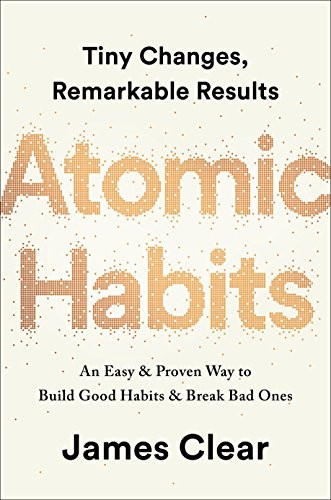
  • Cover of Atomic Habits, by James Clear.

    Read

    Atomic Habits

    James Clear

    I keep this for the argument that a repeated condition does more than a mood: cues, environment, and the behaviours a person actually repeats.

    What I keep is the environment and the repeated action, not a promise that a tiny gain compounds into a result. I try to use it as a loop: a time I already protect, a next step small enough to start, and a sentence written down when I stop. I do not accept a habit streak, or a routine I have not actually run, as evidence that the idea is working.
    This printing on Amazon (opens in a new tab)

  • Cover of Zero to One, by Peter Thiel with Blake Masters.

    Read

    Zero to One

    Peter Thiel with Blake Masters

    I keep this for one distinction: copying a product that already exists, or making something that is actually new.

    What I keep is the question of whether I am making something new or shipping a variation of a product that already exists. I use it before a screen: who is stuck, what they do today, and what would have to be true for a switch to be worth it. I do not accept the book as a method that produces a company.

    This printing on Amazon (opens in a new tab)

  • Cover of The Lean Startup, by Eric Ries.

    Read

    The Lean Startup

    Eric Ries

    I keep this for the habit of holding a product idea as a hypothesis, and of letting someone's behaviour answer it.

    What I keep is the line that an idea is a hypothesis and the build is not the test. I use it to write down what I expect someone to do, then to look at what they actually do. I do not accept praise, a visit, or my own excitement as demand, and I have not published numbers that would let a reader score the projects on this site.

    This printing on Amazon (opens in a new tab)

  • Cover of Wings of Fire: An Autobiography, by A. P. J. Abdul Kalam with Arun Tiwari.

    Read

    Wings of Fire

    A. P. J. Abdul Kalam with Arun Tiwari

    An autobiography of scientific work: laboratories, institutions, and the projects around them. Written with Arun Tiwari.

    What I keep is the record of technical work done inside laboratories, institutions, and projects. I use it as a check on the idea that understanding arrives before the build. I do not treat the life as a template for my companies, and I am not quoting the book.

    This printing on Amazon (opens in a new tab)

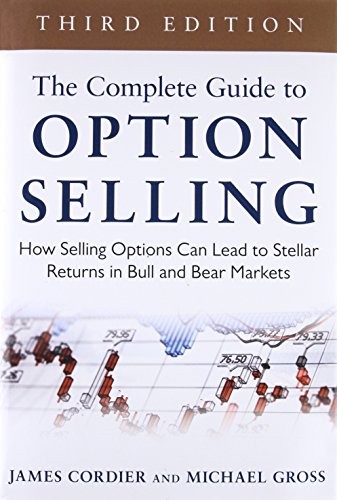
  • Cover of the third edition of The Complete Guide to Option Selling, by James Cordier and Michael Gross.

    Read

    The Complete Guide to Option Selling

    James Cordier and Michael Gross

    I keep this as a book about how an option is sold, how the position is structured, and where the risk sits. I am not repeating its claims about returns.

    What I keep is the structure: how an option is sold, how the position is put together, and where the loss can sit. I use that as reading behind a preference for knowing the loss before the gain. I do not accept the book's claims about returns as a result of mine, and I am not publishing a rule from it.

    This printing on Amazon (opens in a new tab)

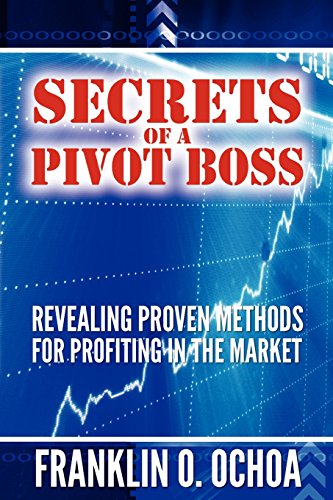
  • Cover of Secrets of a Pivot Boss, by Franklin O. Ochoa.

    Read

    Secrets of a Pivot Boss: Revealing Proven Methods for Profiting in the Market

    Franklin O. Ochoa

    I keep this as a book about how pivot levels are drawn and read. I am not repeating its setups or its claims about profit.

    What I keep is a way of looking at pivot levels: how they are drawn, and what a chart is doing around them. I use that as a question about structure, not as a setup I am publishing. I do not accept the book's claims about profit. A level on a chart is not a position with a defined loss.

    This printing on Amazon (opens in a new tab)

  • Cover of How to Make Money in Intraday Trading, by Ashwani Gujral and Rachana A. Vaidya.

    Read

    How to Make Money in Intraday Trading

    Ashwani Gujral and Rachana A. Vaidya

    I keep this for the day as a time horizon: entries, exits, and what a short holding period still has to specify. The book's claims are the book's.

    What I keep is the day as a holding period. A position opened and closed in the same session still needs an entry, an exit, and a loss that has been specified. I use the book to separate a clock from a strategy. I do not take a rule from it, and a short holding period does not, by itself, describe the risk.

    This printing on Amazon (opens in a new tab)

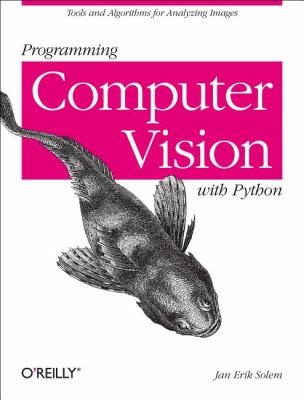
  • Cover of Programming Computer Vision with Python, by Jan Erik Solem.

    Read

    Programming Computer Vision with Python

    Jan Erik Solem

    I keep this for the practical side of seeing with code: how an image is represented, and how recognition, geometry, and retrieval are written in Python.

    I read this early in my career, when I was a computer vision engineer, and I used it then. What I keep is the habit of treating an image as data I can write code against. I am not publishing a method from the book, and I have not recorded which printing I used.

    This printing on Amazon (opens in a new tab)